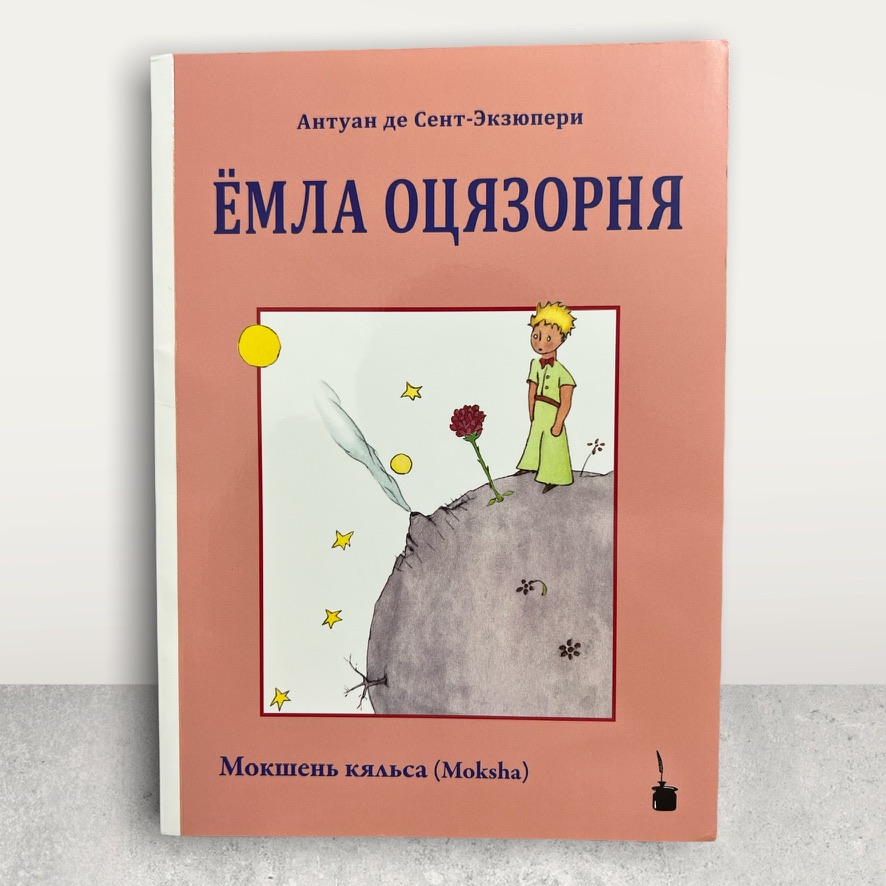
Ёмла Оцязорня / Yomla Otsyazornya — in Moksha language.
Moksha (мокшень кяль, Mokšenj kal) is the second of Mordovia’s two Mordvinic languages, sister to Erzya within the Uralic family, and it takes its name from the Moksha river, along whose valley in the south western part of the republic its speakers have traditionally lived, closer to the historic lands of Tambov and Penza than to Erzya territory further north and east. Though the outside world has long collapsed both peoples into the single Russian label Mordva, Moksha speakers have always maintained their own separate sense of belonging, rooted in this distinct river valley homeland.
Linguistically Moksha has drifted from Erzya to a degree that keeps the two firmly apart as separate literary standards rather than mere dialects of one tongue, most noticeably in its vowel system, which preserves a richer set of reduced and unstressed vowel sounds giving Moksha speech its own particular texture. Centuries of close proximity to Turkic speaking neighbours to the south and east, chiefly Tatar communities, left their own mark on Moksha vocabulary and pronunciation, adding another layer of local colour that further distinguishes it from its northern Erzya cousin even as both remain unmistakably part of the same Mordvinic family.
Moksha shares fully in the broader Mordvin spiritual and literary inheritance, its own folklore woven into the modern epic Mastorava alongside Erzya material, and its own traditional supreme deity, often rendered as Shkai, standing as the Moksha counterpart to the Erzya Ineshkipaz within a shared pre Christian cosmology that both peoples have laboured to keep alive. Within the wider Uralic family Moksha therefore occupies a position rather like a younger sibling standing confidently apart from an elder one, close enough to Erzya to share a homeland, a history and a mythology, yet distinct enough in sound and spirit to insist, quite rightly, on a name and a literature entirely its own.